


Phone Tracker by Number
Family Locator Inc.
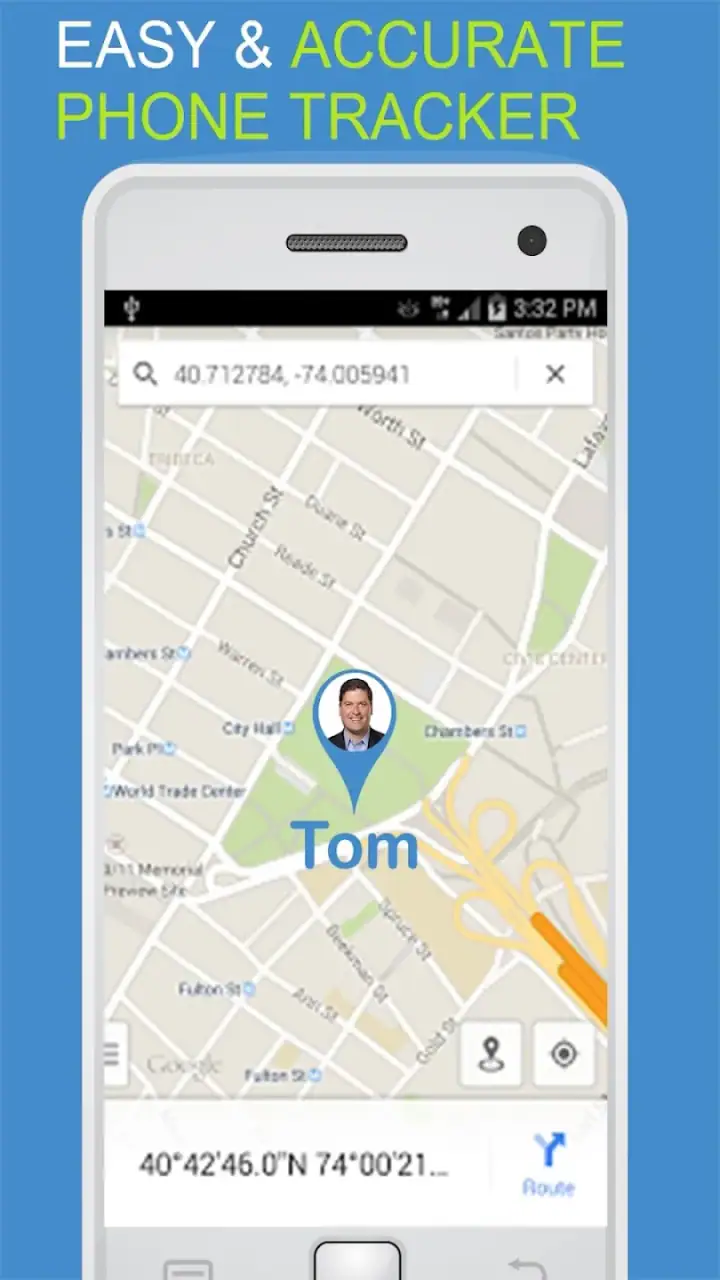
I approached Phone Tracker by Number as a practical location tool rather than a novelty app. Its purpose is straightforward: help people stay connected and make it easier to keep track of loved ones through a phone. In everyday use, that sounds simple, but the experience depends heavily on the quality of the connection between the people using it. When everyone is reachable and sharing location as intended, the app can reduce uncertainty. When a phone has weak service, limited battery, or a person has not agreed to share access, no tracker can turn missing information into reliable information.
That distinction shaped my overall impression. This is a free maps and navigation app from Family Locator Inc., aimed at families and people who want a more direct way to check where someone is. It is available for Everyone, supports devices running Android 7.0 or later, and has reached more than 50 million installs. The scale suggests that the basic idea is easy for many people to understand, but popularity does not remove the need to set expectations carefully.
How Phone Tracker by Number feels when the network is doing the work
The strongest moments come when the app is used as a shared communication aid, not as a replacement for a conversation. Imagine a parent waiting for a teenager to arrive after school. Instead of sending several messages asking for updates, the parent can check the available location information and decide whether everything looks normal. That can be reassuring during a busy commute, especially when the person being monitored is unlikely to answer immediately.
The same idea works for couples, relatives, or close friends coordinating a meeting in an unfamiliar part of town. A map-based view can be more useful than vague messages such as “I’m nearly there,” because it gives everyone a common reference point. I found this kind of use more convincing than the idea of tracking someone constantly. The value is in reducing small moments of uncertainty, not in turning a relationship into a surveillance routine.
Connectivity is central to that experience. A tracker needs current information from a phone, and that information has to travel through a network before another person can view it. In a crowded station, an underground area, a rural road, or a building with poor reception, the displayed position may be delayed or less useful. I would never treat a map marker as proof of someone’s exact present location, especially when a safety decision depends on minute-by-minute accuracy.
Latest News

Uber Eats Under Pressure: What Happens When Delivery Goes Wrong

How QR & Barcode Scanner Adapts to Android and iOS Innovations

Why Waze Navigation & Live Traffic Is Your Essential Travel Companion
CapCut Mastery: Unleash Hidden Features for Pro-Level Editing

How OS Updates Enhance Roblox Adventures

Teacher Simulator: Exam Time Turns Quick Classroom Judgments into a Repetitive Loop
That is also why consent matters more than the store-friendly simplicity of the concept. Phone Tracker by Number should be introduced openly to the people involved. If a family member does not understand who can see a location, when it is visible, or how the arrangement is being used, the app can create tension instead of trust. I recommend agreeing on the purpose first: school travel, a shared outing, checking that an older relative reached a destination, or coordinating a pickup.
What I would set up before relying on it
I would begin with one small, clearly defined group rather than adding every contact immediately. The first test should happen during an ordinary trip when everyone can compare the displayed result with reality. One person can leave home, stop at a known place, and report whether the map seems to update in a way that makes sense. This simple trial reveals more than assuming the app will behave perfectly in an emergency.
I would also make sure each participant knows which phone is being used and that the device is not left somewhere else. A tracker follows the phone, not a person in the abstract. If someone lends the phone to another family member, leaves it in a vehicle, or switches to a second device, the map may still show a technically valid location that is practically misleading.
Gallery
Another useful habit is to pair a location check with a message or call when the situation is important. The map can answer “where might this phone be?” but a conversation can answer “is the person safe?” and “what happened?” That difference is easy to overlook when an app makes location information feel immediate.
Using it in real mobile situations
Phone Tracker by Number makes the most sense on the move. A family can use it while meeting at a festival, a shopping area, an airport, or a large park where people may separate. In those situations, the app can save time by showing whether someone is still approaching, has stopped nearby, or may have taken a different route. I like the idea of using it as a coordination layer around a planned activity rather than leaving it active as a background source of anxiety.
There is a practical difference between checking a family member’s location during a planned journey and trying to locate a lost phone. People often combine those situations in their minds, but they should not assume that a phone tracker automatically solves every lost-device problem. If the device is out of battery, disconnected, or not participating in the relevant sharing arrangement, the result may not help. For a misplaced personal phone, a dedicated device-finding service may be a better first choice.
The app can also be useful for people who regularly coordinate care without living together. For example, siblings might want a simple way to know that an older relative has reached a clinic or returned home. I would still use it alongside a call schedule and direct check-ins. Location information can show movement, but it cannot explain whether someone needs help, has taken a wrong turn, or has simply left a phone in a room.
Travel brings another trade-off. A user may appreciate having a shared point of reference when a group is moving through an unfamiliar city, but mobile data availability and network quality can vary by place. A map that updates smoothly in one neighborhood may behave differently in a tunnel or at the edge of coverage. I would plan the route and meeting points separately, then use the tracker as a convenience rather than the only plan.
Battery, attention, and the cost of staying reachable
Location-related apps compete for the same limited resources as messaging, navigation, music, and the camera. Even without assigning a precise battery impact to this particular app, it is sensible to watch the phone during a long day. Before leaving for an event, I would charge the device, carry a power bank if the day is important, and avoid assuming that a low-battery phone will remain a dependable tracking source.
There is also a human cost: frequent checking can become distracting. If I looked at the map every few minutes, I would probably create more stress than the app removed. A better workflow is to agree on meaningful check-in points, such as departure, arrival, or a delayed meeting. That keeps the tool useful without allowing it to dominate the relationship.
For children and teenagers, the conversation should be especially clear. Explain what the app is for, who can access the information, and when checking is reasonable. A young person may accept location sharing for a journey but object to permanent observation. Respecting that boundary is not only considerate; it also makes cooperation more likely when the information genuinely matters.
What happens when tracking fails or becomes unclear
The most important limitation is that a location display can look precise while still being incomplete or delayed. A marker on a map encourages confidence, but the underlying situation may have changed by the time it appears. If someone seems to be in an unexpected place, I would first refresh my understanding through a message or call rather than immediately assuming the worst.
When a location does not appear as expected, I would work through a calm checklist. Is the person’s phone switched on? Are they somewhere with a usable connection? Did they change devices? Are they still part of the intended sharing arrangement? Has the phone been left in a bag, car, or building? These questions are more productive than repeatedly reopening the map.
A realistic recovery plan should not depend on the app alone. Families can choose a meeting point, share a backup phone number, and agree on what to do if someone misses a check-in. For a group outing, a written plan may be more reliable than trying to solve every problem through a live map. For a vulnerable person, trusted contacts and an established emergency process remain more important than any single tracking tool.
I also noticed a broader trade-off between simplicity and control. Phone Tracker by Number is appealing because the idea is easy to understand, but people looking for highly detailed device administration, advanced fleet management, or a full lost-phone recovery system may find a specialized alternative more suitable. A built-in family-sharing feature from a phone platform can be preferable when everyone already uses the same ecosystem and wants location sharing integrated with other device services.
On the other hand, someone who wants a focused family locator rather than a broad navigation package may appreciate this app’s direct purpose. It is less about planning routes or discovering places and more about keeping a shared view of where connected people or phones may be. That focus is its main advantage, provided the user understands the limits of network-based information.
Using the app with a sensible data and privacy routine
Location is sensitive information, so I would treat access as carefully as I treat a house key. Only include people who need the information, remove old arrangements when circumstances change, and avoid sharing access casually. A family trip may justify temporary coordination, while an old contact from a previous situation may no longer belong in the same circle.
It is worth reading the app’s current permission and privacy screens during setup rather than tapping through them. The exact choices presented can depend on the device and operating system, and location tools often interact with system-level controls. I would check which account or phone is connected, confirm who can view the location, and revisit those settings after a major change such as a new phone or a changed family arrangement.
There is a financial detail to keep in mind as well. The app is free to install, but it includes in-app purchases ranging from about two dollars to around forty-three dollars per item. I would avoid assuming that every useful option is included at no cost. Before approving a purchase, check what it unlocks and whether it solves a problem you actually have. A free starting point is helpful, but it should not encourage accidental spending or pressure anyone into buying features they do not need.
The app is suitable for Everyone from an age-rating perspective, but that label does not remove the need for adult guidance around location privacy. Younger users may understand the map but not the long-term implications of sharing movement. I would explain the arrangement in plain language and make sure the people involved can ask to pause or change it.
For data-conscious users, the best approach is purposeful use. I would keep sharing limited to a defined group and a clear reason, avoid treating location history as entertainment, and use direct communication when a detail is more sensitive than a map can explain. The goal is not to eliminate every network exchange; it is to prevent unnecessary exposure and reduce misunderstandings.
My verdict on Phone Tracker by Number
After considering both its useful moments and its weak points, I see Phone Tracker by Number as a practical option for families and close contacts who want an uncomplicated way to coordinate around location. Its free entry point, broad availability, and focused purpose make it approachable. Family Locator Inc. has built an app that fits a familiar need, and its average rating of 4.3 from around one million ratings shows that many people find the concept worthwhile.
The current version is 7.11, and the app has been available since August 17, 2014. Those details matter less to me than the way the tool fits into a real routine: charge the phone, maintain a reasonable connection, agree on sharing, and keep a backup plan. A tracker is most helpful when it supports trust and communication, not when it is expected to replace them.
I would recommend Phone Tracker by Number to a family that wants occasional location coordination during commutes, outings, or arrivals. I would also recommend testing it before relying on it for an important journey. That trial can show how the app behaves with the phones, coverage, and habits your group actually uses.
I would skip it if you need guaranteed real-time precision, a specialist lost-device recovery system, professional fleet tracking, or a solution that works independently of a network connection. In those cases, a platform-specific device finder, a dedicated navigation service, or a professional tracking product may be a better match. For everyone else, the app can be useful when treated as one part of a broader plan.
My final view is simple: use the map to reduce uncertainty, then use human communication to resolve it. That balance is where this app feels most valuable. It can make everyday coordination easier, but its reliability is tied to reachable phones, sensible expectations, and respectful consent. Used that way, it is a reasonable free choice for staying connected without pretending that a location marker tells the whole story.
FAQs for Phone Tracker by Number
Is Phone Tracker by Number truly free to use?
Phone Tracker by Number offers a free version with basic features that allow you to locate family and friends. However, to access advanced features such as real-time tracking and location history, a premium subscription may be required. Be sure to check the app’s pricing details to understand what’s included in each plan.
How accurate is the location tracking in Phone Tracker by Number?
The accuracy of Phone Tracker by Number can vary depending on several factors, such as the GPS signal strength and the presence of Wi-Fi networks. Generally, the app provides accurate location data within a few meters, but it’s important to ensure that the device being tracked has a strong signal for best results.
Is my privacy protected when using Phone Tracker by Number?
Phone Tracker by Number emphasizes user privacy and security. The app requires consent from the person being tracked and uses encryption to protect data. It’s crucial to read their privacy policy to understand how your data is handled and ensure you’re comfortable with their practices before using the app.
Can Phone Tracker by Number be used internationally?
Yes, Phone Tracker by Number can be used internationally, allowing you to track family and friends across different countries. However, keep in mind that international data charges may apply, depending on your mobile plan. It’s advisable to check with your service provider to avoid unexpected fees.
What devices are compatible with Phone Tracker by Number?
Phone Tracker by Number is available for both Android and iOS devices. Ensure that your device meets the app's system requirements, which typically include a minimum operating system version. You can find specific compatibility details on the app’s download page in the Google Play Store or Apple App Store.
Pros
- Easy-to-use interface for quick navigation.
- Real-time location updates enhance accuracy.
- Compatible with both Android and iOS devices.
- No need for the target device to install the app.
- Low battery consumption during tracking.
Cons
- Requires internet for accurate tracking.
- Limited features in the free version.
- May raise privacy concerns for some users.
- Location accuracy can vary in rural areas.
- Frequent ads in the free version.


